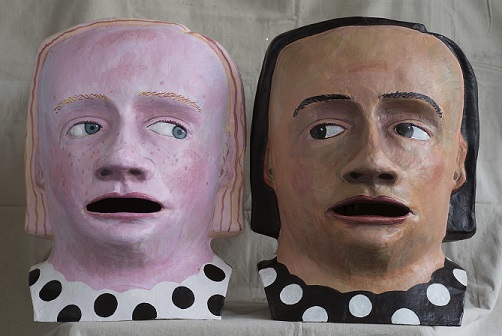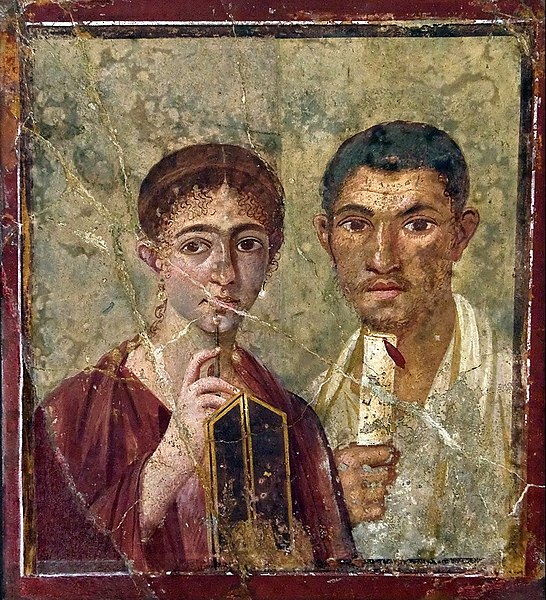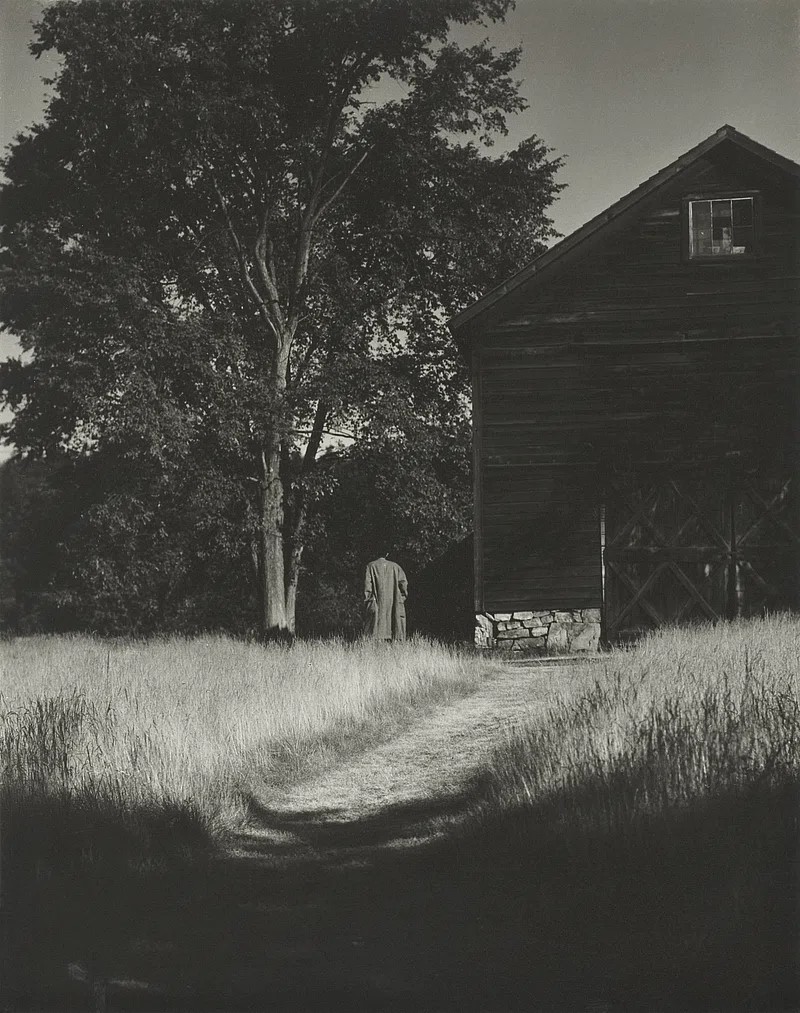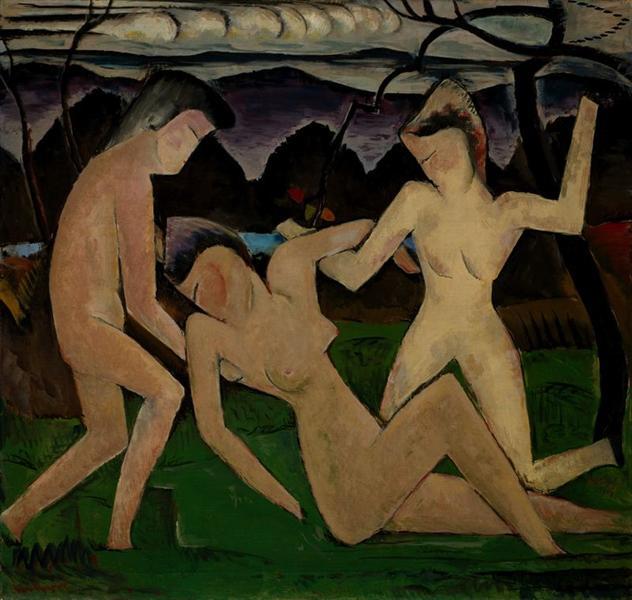
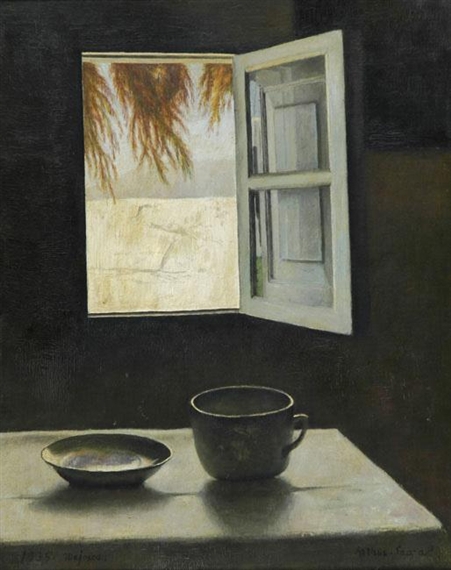
"Thetis," Robaldo Enrique Rodriguez

"Thetis," Robaldo Enrique Rodriguez

Editor’s Note, Issue 24

Readers:

(First a note: For optimal viewing please open Plume in a modern browser — Safari, Firefox, etc. — anything but older versions of IE.)

Now, then.

Welcome to Issue # 24 of Plume.


Well: Happy Birthday. To us. With this issue, we turn two: terrible? Sometimes I think so. Mostly not. And when I do – fleeting:  the work, the kindness of our contributors, the loyalty of our readers, those many poets who submit their poems. Much for which to be grateful.

And to mark this anniversary, a – God forbid – special issue: reprising that initial foray as far as possible, with most of the poets from that effort here again: received these last few weeks new work by Amy Gerstler, Christopher Kennedy, Denise Duhamel, Kimberly Johnson, Mark Jarman, Nin Andrews, Rae Armantrout, Stuart Dybek, and Terese Svoboda. Ricardo Pau-Llosa, John Skoyles, and Juan Felipe Herrera round out the roster nicely, I think, along with “Featured Selection” poet Rachel Hadas. As most things Plume-ish, the idea of this anniversary issue occurred to me, oh, a few weeks ago – and I am thus even more appreciative of these wonderful – and busy – poets’ quick responses. Unfortunately, this small window of opportunity, as it were, has resulted in the absence of a poem from Charles Bernstein, who was otherwise engaged and could not send a poem in time to be included — formally — in the “anniversary” issue. However, I have received a poem from Charles this morning — a beauty, believe me — and will run it in July. Charles, as his email just a few minutes ago states, is with us “in spirit.”

Also, you’ll see below a list of all the contributors – poets, translators, visual artists – who have appeared or in our pages over these two years — or soon will. Frightening, really,  in its quality: one wonders when our luck will run out. (Many thanks, by the way, to Bryan Duffy for putting this together. And to Jason Cook for herding the tech parts.)

But: enough. We are special. Aren’t we all?

And so to business/news.

Our renovations are almost complete: just a few recent issues to be archived.

Happily, our book recommender-in-chief , David Cudar, returns, with a new list to pique your interest. Please subscribe to our Newsletter to see what David has for you this month. Look for the occasional long-form review from him in upcoming issues. Many thanks, again, to Ron Slate for allowing me to slip into his site and make some recommendations of my own in David’s absence.

I am very pleased, indeed, to report that the “Featured Selection” noted above continues to receive positive comments: it’s become a favorite part of our little journal for many, as many have informed me. Mark Irwin’s translation of Alain Borer was  marvelous, and very well-received. Exciting new entries are on the horizon, to follow those in the queue, including a multimedia presentation from Hank Lazar, presently giving a keynote talk for an international poetics conference in Wuhan, China. His work will include both visual art and a jazz improv of one of the pieces. Also, Christopher Kennedy has a series of poems written from the POV of Gregor Samsa. Again, I urge you to email me if you have a project in mind that might be a good fit for this section of Plume:  plumepoetry@gmail.com

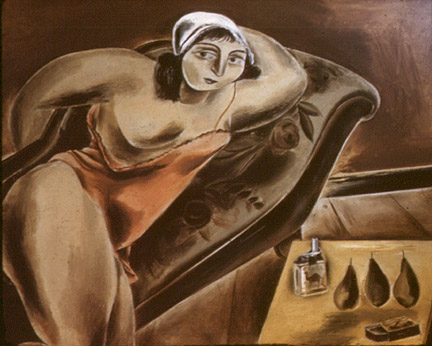
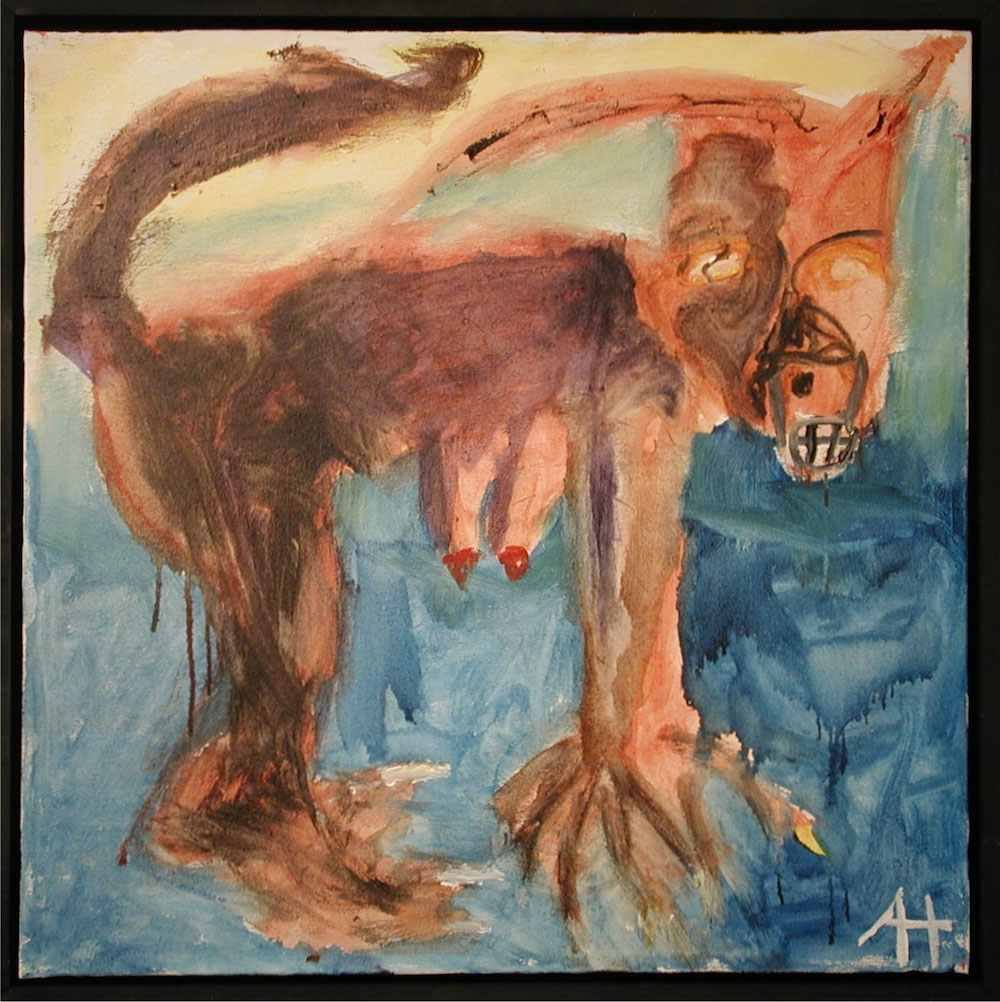
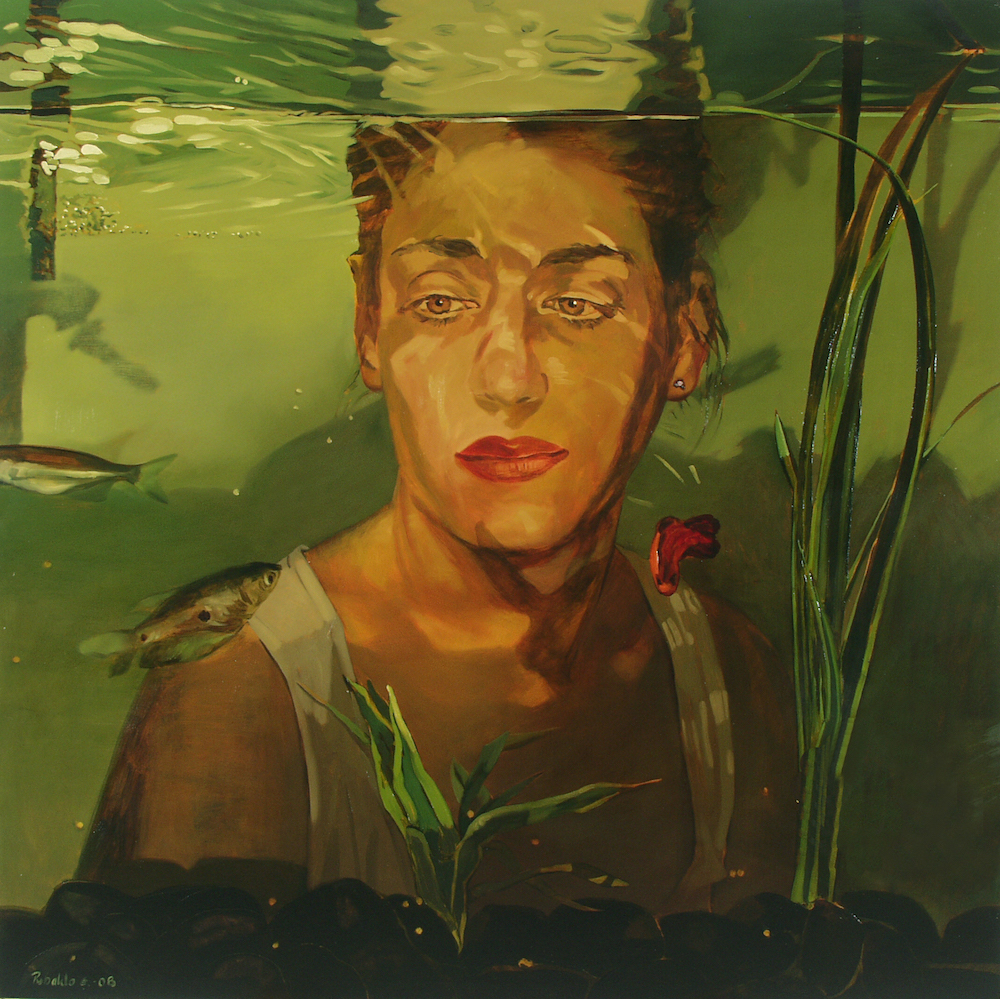
Our cover art this month, “Thetis,” comes from Robaldo Enrique Rodriguez (b. Holguín, Cuba, 1964), a graduate of the Instituto Superior de Arte in Havana.  He left Cuba for Spain in 1991, where he had a distinguished career.  He presently lives in Miami.  More at: robaldorodriguez.com. This piece, by the way, is the work around which Ricardo Pau-Llosa’s poem  “orbits,” to use his term.

A couple of stray bits:

You can now follow us on Twitter: @plumepoetry.

New work received these last few weeks comes from, aside from those who kindly sent in new poems for this issue, Lee Upton, JT Barbarese, Charles Bernstein, Ana Minga (translated by Alexis Levitan), Nicole Cooley, William Olsen Sigman Byrd, Paula Bohince, and Carol Frost.

And here’s the list of poets, translators, and visual artists who have graced  our pages,  both electronic and paper, since issue Plume Issue # 1, and those who soon will join them.


Addonizio, Kim
Agodon, Kelli Russell
Allen, Dick
Alexander, Meena
Alexander, Pamela
Alexie, Sherman
Anderson, Nathalie
Andrews, Nin
Angel, Ralph
Armantrout, Rae
Armitage, Simon
Arnold, Elizabeth
Arvio, Sarah
Atkinson, Jennifer
Aygi, Gennady
Babcock, Julie
Baggott, Julianna
Baker, David
Balakian, Peter
Ball, Angela
Barbarese, J.T.
Barker, Brian
Barnes, Annette
Bass, Ellen
Beeder, Amy
Behn, Robin
Bernard, April
Bernstein, Charles
Bertolino, James
Black, Sophie Cabot
Bliunus-Dunn, Sally
Bogan, Don
Bohince, Paula
Bolt, Thomas
Booker, Stephen Todd
Bonnefoy, Yves
Borer, Alain
Boruch, Marianne
Bosch, Daniel
Bourne, Daniel
Broek, Michael
Buckley, Christopher
Bursky, Rick
Byrd, Sigman
Cairns, Scott
Calaferte, Louis
Calbert, Cathleen
Campo, Rafael
Cassian, Nina
Causey, Carrie
Char, Rene
Charlesworth, Sarah
Chernoff, Maxine
Chirinos, Eduardo
Christopher, Nicholas
Chuan, Xi
Cigale, Alex
Clark, Patricia
Claus, Hugo
Codrescu, Andrei
Cohen, Andrea
Collier, Michael
Collins, Billy
Collins, Martha
Colmer, David
Cook, Rebecca
Cooley, Nicole
Cooley, Peter
Crawford, Tom
Cruz, Cynthia
Culhane, Brian
D’Aguiar, Fred
Du Bouchet, Andre
Di Piero, W.S.
Daniels, Jim
Davis, Christina
Davis, Lydia
Dawes, Kwame
Debelja, Aleš
Dennis, Carl
Derry, Alice
Dimkovska Lidija
Dobyns, Stephen
Dolven, Jeff
Donnelly, Patrick
Dubie, Norman
Dubrow, Jehanne
Duhamel, Denise
Dunn, Stephen
Dybek, Stuart
Eady, Cornelius
Emerson, Claudia
Equi, Elaine
Estes, Angie
Etter, Carrie
Finch, Annie
Fischerova, Sylva
Flenniken, Kathleen
Ford, Katie
Freeman, Molly Lou
Friebert, Stuart
Fried, Daisy
Frost, Carol
Gallagher, Tess
Galassi, Jonathan
Galvin, Brendan
Galvin, Martin
George, Alice Rose
Gerstler, Amy
Gibbons, Reginald
Goldberg, Beckian Fritz
Goodyear, Dana
Greenbaum, Jessica
Gorman, Al
Griswold, Eliza
Graham, Jorie
Groom, Kelle
Grotz, Jennifer
Hacker, Marilyn
Hadas, Rachel
Hahn, Kimiko
Hambly, Barbara
Harrison, Jeffrey
Harrison, Leslie
Hecht, Jennifer Michael
Hejinian, Lyn
Henry, Brian
Herrera, Juan Felipe
Hicok, Bob
Hillman, Brenda
Hirshfield, Jane
Hoagland, Tony
Hoover, Paul
Howe, Fanny
Howell, Christopher
Huddle, David
Hudgins, Andrew
Hummer, T.R.
Hunt, Laird
Irwin, Mark
Jarman, Mark
Johnson, Kimberly
Johnston, Devin
Jollimore, Troy
Jordan, Judy
Kallet, Marilyn
Kapovich, Katia
Kasischke, Laura
Kendall, Stuart
Kennedy, Christopher
Kenney, Richard
Khoury-Ghata, Vénus
Kinsella, John
Kirby, David
Klein, Lucas
Knox, Jennifer L.
Krisak, Len
Krolow, Karl
Kronen, Steven
Lamon, Laurie
Larkin, Joan
Larsen, Lance
Lasky, Dorothea
Laux, Dorianne
Lazer, Hank
Lea, Sydney
Lee, Karen An-hwei
Levin, Phillis
Levitan, Alexis
Liardet, Tim
Lifshin, Lyn
Liu, Timothy
Logan, William
Longenbach, James
Lux, Thomas
Mackey, Mary
Malroux, Claire
Manning, Maurice
Martin, Diane
Mathis, Cleopatra
Matsuda, Lawrence
Maulpoix, Jean-Michel
Maxwell, Glyn
Maynard, Christopher
McCombs, Davis
McDuff, David
McGrath, Campbell
McLane, Maureen
McPherson, Sandra
Meinke, Peter
Meitner, Erika
Mendes, Guy
Miller, Wayne
Minga, Ana
Mlinko, Ange
Moldaw, Carol
Motion, Andrew
Muhlin, Jay
Muldoon, Paul
Muratori, Fred
Muske-Dukes, Carol
Nooteboom, Cees
Novey, Idra
Nurkse, D.
Nutter, Geoffrey
Olds, Sharon
Olsen, William
Orlowsky, Dzvinia
Ossip, Kathleen
Ostriker, Alicia
Padel, Ruth
Pankey, Eric
Papadopoulos, Melina
Parini, Jay
Pastan, Linda
Pau-Llosa, Ricardo
Peacock, Molly
Perros, Georges
Phillips, Carl
Piercy, Marge
Pinsky, Robert
Polonskaya, Anzhelina
Powell, D.A.
Prufer, Kevin
Pugh, Christina
Purpura, Lia
Raab, Lawrence
Racz, G.J.
Raeber, Kuno
Revell, Donald
Rios, Alberto
Rivard, David
Rocha, Flávia
Rodriquez, Robaldo Enrique
Rogers, Hoyt
Rosser, J. Allyn
Rossini, Clare
Sadoff, Ira
Sala, Jerome
Šalamun, Tomaž
Salter, Mary Jo
Sarishvili, Maya
Schulman, Grace
Schwartz, Lloyd
Seaton, Maureen
Serpas, Martha
Seshadri, Vijay
Shapiro, Alan
Shapiro, David
Sharp, Meighan
Sheehan, Julie
Shumate, David
Simmons, Laurie
Skinner, Jeffrey
Skloot, Floyd
Skoyles, John
Slate, Ron
Sleigh, Tom
Smith, Bruce
Smith, Charlie
Smith, Michael
Smith, Ron
Smith, R.T.
Snidjers, A.L.
Spaar, Lisa Russ
Spires, Elizabeth
Springer, Jane
Stanton, Maura
Starzinger, Page
Stine, Alison
Svoboda, Terese
Swensen, Cole
Sze, Arthur
Szybist, Mary
Tafdrup, Pia
Taren, Michael Thomas
Taylor, John
Tobin, Daniel
Trakl, Georg
Trowbridge, William
Twichell, Chase
Ulanov, Alexander
Upton, Lee
Valentine, Jean
Vogelsang, Arthur
Vreuls, Diane
Wachtel, Andrew
Wagoner, David
Wakoski, Diane
Waldrep, G.C.
Waldrop, Bernard
Waldrop, Rosmarie
Warren, Rosanna
Weigl, Bruce
Wunderlich, Mark
Young, C. Dale
Young, David
Yu, Hsia
Zapruder, Matthew
Zeqo, Moikom


Much gratitude, as always, and I do hope you enjoy the issue!


Daniel Lawless
Editor, Plume


Two Poems

My Last Deidre

after Frank O’Hara


I am a not woman.  I am an orgasm.

An orgasm of life.

Why? I dunno.  I would rather be

a woman, but I am not.  I am not

like my friend, Deirdre.

When I drop in to see her, she says,

“Sit down. Have a glass of Cabernet.”

I drink. She drinks.  I look up.

“You are always welcome here.”

“Okay,” I say.  So I come.


And she comes, and the days go by.

I drop in again.  And again.

And I come, and she comes,

and the days go by.

One day I drop in.

“Where’s Deirdre?” I ask.

All that’s left of her

is a heap of soiled sheets

and three socks.  One sock

is blue.  One sock is orange.

Another sock is pink.

“She had enough,” the cleaning lady says.


But me?  I keep thinking of

Deirdre.  So I write a poem

called “Deirdre.”  I write another

“Deirdre.”  Then another.

For Deirdre is life.

And I am an orgasm of life.

Therefore I am an orgasm of Deirdre.

As the great Aristotle said,

if A=B, and B=C, then A=C.


Days go by.  I tire of Deirdre.

I stop writing about Deirdre.

I erase her from my pages.

I erase her from my mind.

My life is finished, I think.

I will never mention Deirdre again.

But I have written twelve poems.

I call them MY DEIRDRES.


One day I see Deirdre again.

She says, “Do you remember me?

I shake my head, “No.”

I leave. I do not look back.

I write a thirteenth poem

called “My Last Deirdre.”

I leave the page blank.


The City of the Orgasm

after Italo Calvino


A man could travel years without finding the city of the orgasm, a city where every staircase, statue, window, violin, perfume, dream, song, even every brawl or brand of beer is inspired by the orgasm.  A first-timer might hesitate upon entering, not knowing how to find his place among the throngs of men and women, all dream-colored and nude in the soft light of desire.  But here, as in every city, while some inhabitants are as lovely as angels but possess an iciness (or what the French call une froideur glaciale), others blaze with rage and urgency, their fists raised in the air.  Still others weep and melt like ice cream on the pastel-colored streets. Some parade their orgasms around like trained poodles, giving them treats when they jump through hoops, yap, or roll over and play dead.  Others feel as if they are stuck in elevators, ridden up and down by the orgasms for hours with no particular exit plan.   Still others never know they are there.  Or how little time they have.  They linger in restrooms, staring into mirrors, picking hairs from their brows and chins, applying blush and perfume.  Many fall to their knees, their faces to the ground, saying Amen again and again, as if it were too much to ask for more.  Their prayers move across the skin in slow, red waves.  No one can stay for long.  But no matter how many times a man leaves, he can never recall the exact geography of the town. Only his first and last moments remain clear in the mind.  All else remains forever a secret of the city of the orgasm.


Nin Andrews is the author of five full-length collections of poetry, and six chapbooks.  Her latest chapbook, The Circus of Lost Dreams, is available from iTunes.  Her next book, Why God is a Woman, is forthcoming from BOA.

Difficulty

It’s difficult

not to be sentimental


about the sun

at first,


or when it first

slides out


from between

clouds


and we say it has

“returned”.


But I should back up

and explain


to the alien

doctors


that we know it’s wrong

to be sentimental.


It means you’re too easy

on yourself


or you’re an easy

mark, maybe,


a push-over,


and we’re brighter

than that.


Look there!


Rae Armantrout’s most recent book of poems is Just Saying (Weslyan, 2013). Versed (Wesleyan, 2009), received the Pulitzer Prize and the National Book Critics Circle Award. It was also a finalist for the National Book Award.


Danger: A Triptych

I thought at first it was a rock, a pebble my own tire had somehow kicked up in a weird curve.  I kept driving to my safe parking garage and, sure enough, the dimple, the valley, the chipped paint right above the driver’s side door handle.  At the body shop, the Dent Wizard says she has she sees a lot of these—bored kids with BB guns.  You’re lucky, a few inches higher and you would have had a shattered window. 

A nurse hands me a white plastic bag of clothes at the hospital—the stiff brown blood on my mother’s jeans that crunches when I try to bend it, her torn sneaker, her torn shirt, blood hardening the tear holes like frames with no snapshots inside.  Her hard bloody sock.  I came from my mother’s blood.  I arrived bathed in her. The nurse says I shouldn’t wash these clothes but save them for a lawyer.

I loved when my dad carried me upside down or when he lugged me like a sack of flour over his shoulder or when he threw me to the ceiling and caught me on the way down.  I loved when he spun me by the arms.  He instilled in me a love of Ferris wheels and roller coasters and Bungee cords.  Once I was small as an olive, once as small as a BB.  Once I wasn’t even here.


Denise Duhamel is professor of English at Florida International University and the author of numerous poetry collections, including Ka-Ching, Two and Two, and Queen for a Day: Selected and New Poems. Duhamel has written five chapbooks of poetry and coedited, with Maureen Seaton and David Trinidad, Saints of Hysteria: A Half-Century of Collaborative American Poetry. The recipient of numerous awards, including an NEA fellowship, she has been anthologized widely, including Penguin Academics: Contemporary American Poetry; Seriously Funny: Poems about Love, Death, Religion, Art, Politics, Sex, and Everything Else; and Word of Mouth: Poems Featured on NPR’s “All Things Considered.” Duhamel is guest editor for The Best American Poetry 2013.

Broadcast

1

Five blank days of snow,

and then a sunset fills feeders

emptied of thistle seed

with the glow of vacuum tubes.


2

Without the golden weight

of finches, radiant columns sway

from the white silhouette

of a black walnut tree.


3

What frequencies might they

transmit? Beyond the wind-

blown static of memory,

what music?  What news?


Stuart Dybek’s most recent book of poems is Streets in Their Own Ink (Farrar, Straus and Giroux). His fiction includes Childhood and Other Neighborhoods, The Coast of Chicago, and I Sailed with Magellan, a novel-in-stories. Dybek’s work has won numerous awards, among them a Lannan Prize, a PEN/Malamud Award, a Whiting Writers’ Award, a Guggenheim Fellowship, a MacArthur Fellowship, a Rea Award for the Short Story, and numerous O. Henry Prizes. His work has also appeared in both The Best American Short Stories and The Best American Poetry.


The Suicide’s Wife

inhabits an invisible island

of last ditch attempts

and ancient consolations

where geyers belch

thermal vents hiss

messengers of silence arrive


she swam ashore nearly naked

hands scraped raw on coral

bra and panties soaked through

sand in her teeth

she’s no villainess

he loved her stubborn luster

a half written sonata

she slowly approaches

the condition of music


sure they argued sometimes

the word “argue” from latin

meaning to make clear

police ransacked his desk

the note turned up in his pocket

with the letter for his sister

a baseball ticket stub

receipts for two “taco platters”

part of a bookmark

he whose soul was bound with mine


six weeks later she looks great

thin and pearlescent, a statue

of justice sans blindfold

she wears beautiful blouses now

peach, gold, and seedling green

lushness follows destruction


sunset’s lurid tonight

cocktail of too many boozes

she’d like to switch it off

via remote but there’s no

antidote for celestial events


a frantic bat takes a wrong turn

from the attic, veers into the living

room, bounces off walls

a sick flut-thud each time it hits

the suicide’s wife grabs her roasting pan

climbs the kitchen counter to trap it

claps on the lid, then releases

the creature into the trees

where the lawn peters out

where the idea that at death

something is liberated

can flap blackly away


Amy Gerstler’s most recent books of poetry include Dearest Creature, Ghost Girl, Medicine, and Crown of Weeds. Her book of poems Bitter Angel received a National Book Critics’ Circle Award in 1991. Her work has appeared in numerous magazines and anthologies. These include The New Yorker, Paris Review, American Poetry Review, several volumes of Best American Poetry, and The Norton Anthology of Postmodern American Poetry. She teaches at University of California at Irvine.

Even the Gun Does Not Want to be a Gun

It denies the polish

Its seablood sculpted elegance the weight in blue machine

It ignores its howl if only it could truly sing

If only it knew more than one long word

Of one long dismembered song


Juan Felipe Herrera, recently named the Poet Laureate of California, has had a distinguished career spanning four decades. Recently he published two volumes of collected poems, Half the World in Light, which won the 2008 National Book Critics Circle Award in Poetry, and 187 Reasons Mexicanos Can’t Cross the Border (City Lights, 2007), which emphasizes his contributions to the San Francisco Renaissance and to the emergence of spoken-word poetry.


Aunt Rolla

She had the softest face

She treated it with ointment

She’d had smallpox as a girl

I remember how kind she was


She treated her face with ointment

You could see the pits and craters

I remember how kind she was

She would let us touch her scars


You could see the pits and craters

They were smooth and rosy

She would let us touch her scars

When we were little children


Though they were smooth and rosy

Her scars disfigured her

When we were little children

We were afraid to touch


Her scars’ disfigurement

From small pox as a girl

Was explained and yet she scared us

Until we touched her face


Mark Jarman is the author of 10 books of poetry, the most recent of which is Bone Fires:  New and Selected Poems (Sarabande Books, 2011).  He has also published two collections of his prose, The Secret of Poetry (Story Line Press, 2000) and Body and Soul:  Essays on Poetry (University of Michigan Press, 2001).  He is Centennial Professor of English at Vanderbilt University.

Big Finish

Now that the last shaft of sunset has collapsed

into that rubble of cloud, let’s dust off

and see how bright the stars are, the disclosed

vault spinning like a discoball been drilled

smack into Polaris. My oracle’s

a bullhorn for the endtimes, portending

wars and rumors of wars in the stars’ course

headlong through the heavens. And even though

the astrophysicists as in chorus

to the oracle declare that all this sparkle,

every spectacular atom of it,

is a death, the expired light of bodies

that have burned themselves down to nothing,

yet they are so bright, and shimmery,

and to shimmy seems their light to me,

sequins tilting into a spotlight.

Don’t they move like jubilation on their wheel?

And don’t they flash with brash abandon?

And if finally they should quit their spheres

and fall upon us, their apocalypse

will surely seem a shower not of wormwood

but confetti, gleeful streaking

down the sackcloth dark to pronounce our doom

a wop bop a loo-bop, a wop-bam-boom.


Kimberly Johnson‘s collections of poetry include Leviathan with a Hook, A Metaphorical God, and the forthcoming Uncommon Prayer. Her monograph on the poetic developments of post-Reformation poetry will be published in 2014. In 2009, Penguin Classics published her translation of Virgil’s Georgics. Her poetry, translations, and scholarly essays have appeared widely in publications including The New Yorker, Slate, The Iowa Review, Milton Quarterly, and Modern Philology.

Confusing Myself with the Whippoorwill

Today, I was a madness of regrettable actions. At the convenience store, I eyed the cashiers warily as they slouched in round-shouldered, teen-aged aplomb. Their youth not yet wasted. Try not to think was my mantra as I left through the slow, antagonistic electric doors, but the whippoorwills disturbed me with their calls, despite a 93% decline in their numbers in the Empire State. And where have they gone? Camouflaged beyond reason so as to be nearly extinct? These questions led me to my own desire to disappear. At home, filled with envy, I chopped some vegetables for later when the seasons have changed and my plumage has darkened, my face of feathers and slanted light a veritable mirage.


Christopher Kennedy’s most recent collection of poetry is Ennui Prophet (BOA Editions, Ltd.). His work has appeared in many print and online journals and magazines, including Ninth Letter, Mississippi Review, Ploughshares, and McSweeney’s. He is an associate professor of English at Syracuse University where he directs the MFA Program in Creative Writing.


Thetis

Thetis

            after the painting “Thetis (Aquarium)” by Robaldo Rodríguez


We see her through her element, not

in it, a face of harvest and sand gazing

upon a crypt of waters, fish jotting

the tight firmament.  The water bends

her to fill this pane and tints her face

into nature.  She ignores these mere effects,

dragged inward by the pull of another tide,

welcoming the nobody she finds there at rest,

as a creature of bright scales finds respite

in crevices where her lights are blind.

Glints weave paths across the face and tank

to mark the painting’s solitary and troubled link

to the instant, for a goddess needs no shield from time.

Her son, it’s true, has cast his fate with might.


Ricardo Pau-Llosa’s seventh book of poems, Man, is from Carnegie Mellon U Press, which published his previous four titles.  He has new work in Poetry, American Poetry Review, Stand, Southern Review, and other journals.  He is also an art critic and curator. More at www.pau-llosa.com.


Coal Bin

Some witchy and slinky,

ready to coo on a pillow,


others nun-like, eyes open

with the wonder of a startled


sleepwalker—all bluntly bare.

My uncle stashed his harem


of goddess statues

in our coal bin


where I caught him

at the casement,


turning his bronze minxes

and virgins this way


and that, as innocent

as the slow boy next door


who spun a huge top

by a string above his lap


as he sang the hymn

about shepherds and sheep


on that street that was less

pasture and more tray


of ashes stubbed out

by the hand of the lord.


John Skoyles has published four books of poems, A Little Faith; Permanent Change; Definition of the Soul, and most recently, The Situation. His work has appeared in Poetry, The American Poetry Review, The Atlantic, Harvard Review, Slate, Yale Review and The Poetry Anthology, 1912 – 2002, among others. He teaches at Emerson College and serves as the poetry editor of Ploughshares.  The Permanent Press will publish his autobiographical novel, A Moveable Famine, in 2014.

The Injured Future

Far left cluster the listeners, their heads lifted toward the speaker.

Two boys tease a dog in the foreground near a horse with a raised hoof.

The speaker holds his finger to the sky.


The fly over the horse’s tail hovers, despite the breeze.

The sun’s radiance–long dashes–telegraph sunrise or set

the way the center squad of horses, their riders


leaning forward in the epitome of speed, mean

either progress or retreat. The bell ringer on tiptoe

silences the woman-with-open-mouth. She knows.


A last bird wings over her, to dive or announce fish, fusion, or fertility.

The forced landscape behind it insists, with palm and cypress,

limes and firs and olives, that ocean is necessary where sky


and its dashes go thin. In the farthest corner a single figure,

as lone as his parapet suspended in the perspective,

loses his grimace, narrowing his eyes to aim.


This is not a Christian parable but a scene beside the sea of what next?

so deathless white flags flap along the border out of unison,

the visuals of violence, the future of T.V.


Terese Svoboda‘s books include Bohemian Girl, Weapons Grade, Laughing Africa, and Trailer Girl. Her work has appeared in The Atlantic, The New York Times Literary Supplement, The Nation, Spin, American Poetry Review, Paris Review, and The New Yorker. New poems are forthcoming in the Southampton Review and New World Writing.

FEATURED SELECTION: Ten Poems
by Rachel Hadas

By way of introduction to this month’s “Featured Selection,” first a brief appreciation of Rachel Hadas’s new book of poetry The Golden Road, from the NY Times Book Review, followed by an email interview with the poet conducted recently, the work itself, and some biographical material.


The Golden Road
Poems
By Rachel Hadas.
TriQuarterly/Northwestern University, $16.95.


Hadas is sometimes classified as a New Formalist, but it’s a misleading and restrictive label, seeing as how she has mixed free and formal verse ever since her 1975 debut, Starting From Troy. Some of her previous 14 volumes possess cool, classical surfaces and meditate like essays in abstract language. Still, her best poems have always used form to control the undercurrents of feeling and have increasingly fixed on the personal — love, loss and the sublime, including the uncanny power of dreams, her own and “some unguessed-at stranger’s.” The most powerful poems in her latest book, The Golden Road,” build from Strange Relation, her 2011 memoir of her husband’s decline into dementia. “Boston Naming Test” reprises the facts of one chapter but transforms them forcibly: her husband’s silence becomes “a sheet of paper either blank / or scribbled over with an alphabet / nobody can read” and “a calm sea / closing over your head.” Her array of metrical forms is impressive too, but she deploys them flexibly so that some seemingly free poems are really measured, with varied line lengths. This powerful, autumnal book ends elegantly: the title poem makes Hadas’s personal story universal through the archetypes of season, sunlight and a curving road, where the speaker sees her son coming the opposite way and grasps how “the living pass the dead.”

Matthew Brennan is the author of The House With the Mansard Roof, a collection of poems, and The Sea-Crossing of Saint Brendan, a verse-narrative.


Below is an email interview with the poet (RH), conducted by the editor of Plume (PL).

Plume: There is an elegiac quality to “The Golden Road” – autumnal. Would you agree?

Rachel Hadas: The Golden Road (book as a whole and title poem) are indeed and indisputably autumnal and elegiac: the season, the time in a life…and the reference near end of title poem explicitly addresses the elegiac quality of my Muse, whose cardigan might be said to be black or charcoal grey instead of dove grey.  I take her to task for being so gloomy.  (By the way the image and idea of the elegiacally drab cardigan came to me in an MFA poetry workshop I was teaching at Rutgers in maybe 2010.) But I’ve come to realize that she – my Muse -  has always responded primarily to loss, to looking back, since my father’s death jump-started me into poetry when I was seventeen.  That poetic proclivity doesn’t have to mean (I hope) that I am myself a gloom-bound character – though maybe I am.

PL: More and more, in poems like “Host At Last” and in lines like “all is vestibule” you seem to be occupying a transition-space. Care to elaborate?

RH: Transition: yes indeed.  Good call.  My new collection (forthcoming I am not sure when) entitled Questions in the Vestibule, contains a poem of that title.  One might say that every moment in life is vestibular, but some  periods feel more vestibular than others.  My husband’s death in October 2011 (talk about autumnal) ushered me into a new space, which in a poem you haven’t seen I call a courtyard.  But one doesn’t always know one’s in a new space.  There’s intermittently a sense of emptiness, of clearing away, of waiting for what one isn’t sure. My poems always explore and express what I can only dimly grasp cognitively or analytically, so I was – poetically – wavering at a threshold, liminal being another useful word here.  This intuitive approach may be what you have in mind when you refer (#13) to my thinking being inductive.

PL: Also, you occupy an after-space: something great and terrible has happened, and you seem still to be reeling from its effects, as in this from “The Cloak”: “The afterlife turns out to be not quite/an afterlife. I am alive; I live there.”  Can you talk about this – is it purgatorial or bare of spiritual tone?

RH: The “after-space” you refer to here is something like the vestibular space I talk about above. As to specifics: “The Cloak” was written before, not after, something “great and terrible” happened, if by great and terrible you or I might mean my husband’s death.  But the poem was written during my radical loneliness fairly late in his illness, when I may have felt I was surviving not death but, if this makes sense, ordinary life.  Also, the epigraph to “The Cloak,” from Book VI of the Aeneid, “quisque suos patimur manes,” which is very hard to translate, means something like “each of us after death suffers or experiences his own ghosts/spirits.”  The happy couple walking by on Broadway, whom I recognize but to whom I am invisible, seem to belong to inhabit the land of the living, while I’m a kind of shade.

PL: The poems here speak to sparseness, for example, “a peeling away” from “The Hammock”; do you feel this disencumbering is revealed in the style of your writing, or is it simply another subject?

RH: Sparseness: I hope so, at least relative to my earlier work, both stylistically and thematically.  Alicia Stallings’s blurb to “The Golden Road” beautifully speaks of “a severe beauty stripped of ornament”.  Again, I can only say I hope so.  My revision process certainly tends toward tightening, and as I say in “The Hammock,” to which you refer, this process of stripping perhaps tends toward abstraction.  My earlier poems have too many words in them, as Kay Ryan once kindly pointed out.  Not that there aren’t plenty of words in “The Golden Road,” too – I’m still (obviously) drawn to forms like the sestina.

PL: You might just be the most successful employer of enjambment among currents poets – is it a tool you are conscious of in every poem?

RH: Gee, I didn’t know I was such a good enjamber.  Any poet working in meter, and some poets working not in meter – any poet who read around in poetry in English -can’t help being aware of enjambment as a rhetorical as well as a technical resource.  Or so I like to think.

PL: Who are you reading at the moment?

RH: I’ve recently been unwell, short hospital spell, so have been reading /rooting around for pleasure in fiction I already knew, like Barbara Pym’s A Glass of Blessings, and one wonderful new (2008) novel, Mischa Berlinski’s Fieldwork.  Poetry: revisiting James Merrill’s beautiful poem “Days of 1964″ and a number of Merrill poems that link up with it, for a presentation I was going to but can’t give at the West Chester poetry conference.  And thinking about a course in Advanced Creative Nonfiction [sic] I’m supposed to be teaching at NYU next fall is sending me back to Phillip Lopate’s rich anthology The Art of the Personal Essay: Seneca, Sei Shonagon, Hazlitt…riches.  Lydia Davis was saying she found Gissing to be a page-turner; maybe I’ll tackle him next, though at some point in my long past I’ve already read some Gissing. I love to read lying down, so I’m wallowing.

PL: Do you compose on a computer now? Has this had any effect on your work at all – or your life?

RH: No, I compose by hand, sometimes eight or ten or twelve drafts by hand, though at some point I put it on the computer, print it out, edit by hand, and so on.  Tightening – or so I hope. With prose, like my occasional Freelance column for TLS, I turn to the computer sooner, maybe for the second draft.

PL: You seem to delight in mixing high and low culture, if those are not offensive terms, in your poems: popsicles and Homer together would not seem out of place in a Hadas poem. Does the presence of one amplify the other?

RH: Homer and popsicles is a charming juxtaposition, but really, when it comes to mixing high and low culture, I’m no match at all for John Ashbery or Anne Carson, not to mention a whole crew of poets younger than I am for whom pop culture is the water they’ve always swum in.  I don’t mean only pop entertainment references, though those abound, but the kind of casual, chatty tone you find in Matthew Dickman, Jessica Greenbaum, and oh so many other good poets.  Still, cell phone and computers and baseball caps – the stuff of our lives, or some of it -  do seem to be working their way into my diction.  Sure, I’d hope the juxtaposition  or cross-fertilization is mutually reinforcing, both at the verbal and thematic level.  Like enjambment, though, it’s pretty much unconscious while I’m writing.

PL: Dream: refuge from all for you? Or fountainhead? E.g., Saint-Pol Roux’s sign above his bed” The poet is working.” Or neither?

RH: Dreams: not so much refuge as poetic lab or hothouse.  A staggering and perhaps increasing number of my poems start out as records or explorations of dreams, or take their imagery or even plot from dreams. Examples from The Golden Road would be “Amphora,” “The Dream Retriever,” and “Winding Stair, Lost Sneaker, Rising Tide,” and there are numerous examples in other books of mine too.  As you put it: “fountainhead.”  I love the idea of the “The poet is working” sign.  Of the poems of mine featured in Plume, certainly at least four come out of dreams rubbing their eyes: “Beside the Bed,” “The Pink and White Wallpaper,” “The White Door,” and “The Death Row Dream.”


Ten Poems

The White Door


I made an offering and left the shore,

then turned around, looked back.

There was nothing to fear.

I was past trouble, I had paid the price.

Meadows full of time to wander in;

what could be broken had already been.

Old losses had themselves now been misplaced.


I don’t know how to speak.

Armloads of wildflowers cover something dead.

We two struggle uphill.

What are you afraid of?

Everyone sees visions.

You must go away and then come back.

My skin was wrinkled and my hair was white.


No one admits to it.

They continue living as if they’re alone.

I only brought enough for a short stay.

My son’s bag was heavier than mine.

Behind the white door

the queen lies in her solitary bed.

Curtains open to reveal the dawn.


Mixed Weather


Sleepy afternoon in Paradise.

The tent and catering people have packed up,

the grand piano’s rolled back up its ramp

into the truck.  The ashes sprinkled, family

departs, guests having left the day before.


The sight of an old sweater hung to dry

over a chairback tears the day in two.

The whole long-planned memorial: bring him back,

so we can find, then lose him once again –

was this the point?  And will the chase go on


forever?  Look, the sky is a confusion.

Sun’s struggling to shine against the rain;

rain, resisting, weeps into the sun.

Ghost flash: here, then gone

in Paradise this sleepy afternoon.


Crossing the Line


When was the last time my son told me his dreams?

When did I tell him mine?  Replacement’s law

ordains that dream recipients change faster

than the cloudy, stubborn stuff the teller

whispers on waking.  Till not long ago

I used to sleep beside a man whose dreams

at some point broke loose from narrative

and drifted slowly into still black water.


One dark December dawn, a shining presence

stood in the threshold of a seminar room

wordlessly indicating it was time

to cross the line.  Which line?

Which threshold?  Who am I

telling this to, I who sleep alone?


Books


The mother I omit,

the nature and the nurture,

the bedtime reading, rocking, bouncing, singing,

colors of vowel and syllable.

Home, library, bookstore,

I skip straight to the shelf:


Aha!  The reaching out,

picking up, opening,

touching, flipping, skimming,

and then the carrying

home and diving in

head first, one’s nose proverbially deep,


and surfacing from time to time for air,

and plunging back,

eyes flicking side to side and pages turning.

We call it living.

But living is what comes before the losing.

So what we do not lose we get to keep?


After the reading, re- and re-re-reading

comes the dire necessity of weeding,

picking out, lending,

sorting, regretting,

packing, schlepping,

wishing, remembering, forgetting –


the restless and incessant back and forthing

as long as we are living

and later maybe other fingers turning

pages, some aftertaste, some ghost-

ly taste of ownership,

some aftertaste, like loving.


Black Box


Boxed into darkness, cramped in a dark corner,

you struggle to emerge as from a tomb,

unfold the tattered wrappings and step forth

into some clean new time,


oh bright-eyed mischief plotting your escape,

mercurial and restless, always drawn

onwards.  Sleep’s voiceover had sage advice:

Go to an artist’s colony again.


Unlikely now, that hot remote July.

Place, season, ripeness: everything aligned

to braid our two trajectories together.

It might have been sheer happenstance, the blind


bumping of spheres.  We didn’t need to know.

A path was beckoning, so on we strode,

swathed in the safety of our ignorance.

I scrambled to keep pace on the long road.


We were two children, each with a good mother;

two teachers, you with more to teach than I,

I thought, though each gave something to the other.

Now I have ample opportunity


to right the balance.  Mine is to remember,

report, interpret for you, and translate;

to hold onto a sense of who you were;

to reminisce and laugh and meditate.


A heavy basket balanced on my head,

I must walk slowly so as not to spill,

crossing the threshold at a stately pace.

It’s you I carry, so I must stand tall.


So long as I am sentient – then our son –

you won’t have disappeared without a trace.

This morning I climbed from the box of dream

and heard your voice.


The Pink and White Wallpaper


By what dream witchery from the black and white

flowered wallpaper did you pull out

a single spray transformed to three dimensions,

the hairs still clinging to its bulbous root,

then courteously hand this plant to me?

Mere gallantry?  Or an unsaid contention

for me to infer?  And there was more:


a woman glimpsed through a half-open door

making her bed.  The sheets were apple green.

Somewhere in the room a big blank screen

You brushed against, and by some sleight of hand

the figures locked in flatness behind glass

took on heft and shape before my eyes.


Beside the Bed


As I slept I thought I was awake,

though I was lying down.  I was in some

cloudy border region.

Close to the bed in which I lay, a man

was sitting writing something in a notebook,

although there was no light.  Leaning in

a little closer now, he was complaining

about the awkward wording on a test

administered by some neurologist.

His task was not to take the task, but give it.

A doctor then?  If so,

why did he resemble my banker?

I was more and more uneasy.

Abruptly he was lying next to me,

on my left side, as my husband always had.

His legs were as long as my husband’s.

Now he was draping one of his thighs over mine.

Wordlessly I asked him to move over

so there would be room for both of us to sleep.

Now he was in the bathroom.

I didn’t want the noise of water running

to disturb my husband, who was sick.

Then I remembered: my husband was dead.

Who had been sitting by my bed?

I didn’t know him, though I thought I did.


Sunset, Anger, Sleep


We glide through the unfurling of a sunset

that has gathered into its rich folds

enough vermillion so

no one is left

out in the cold.

In yesterday’s support group, a new woman

inquired just what kind of anger someone

else was feeling, aimed at what or whom:

eyes rolling heavenward

or a fist shaken?

Here on earth

there is no no lack of anger;

its myriad shapes all coexist and flourish.

No lack of sunsets either,

though how long

since I’ve seen one?

And not merely seen

but ridden through this bath of molten gold

past lambent Trenton into Philadelphia

and even weirder splendor, so downtown

Wilmington presents as palaces

twinkling, bejeweled, out of L. Frank Baum

against a sapphire sky.

We riders plunge

into pure colors spurting

out from the track on either side

in uncanny silence.  I look around:

most of my fellow passengers are sleeping.

Of weariness also

there is no shortage.  Trio

of inexhaustibles it is somehow

sustaining, now the sky is almost dark,

to piece together: Sunset.  Anger.  Sleep.


Nap


Our waking hours are stiff with the unsaid.

Sleep’s feathery fingers can unlace the bodice of silence.

A laugh erupts that started as a snore.


This muggy August afternoon, light rain

Sparring with streaks of sun,

I am a cargo-laden barge.  I am

the drowsy stream the barge is drifting down.


The Clench


How to figure forth this happiness?

The safe arrival of an ardently

longed-for event?  The unexpected swoop-

ing down of a surprise?  Gift in the hand

is the wrong trope if the hand then closes,

its hoarder’s grasp clenched hard over the prize.


Or gratitude, or glow:

do these fit into one day’s space and stretch

its hour past recognition, or do they

work their transformation from outside,

a heavenly radiance in one strong shaft?


A change, yes, in the quality of light.

And yet light changes with each passing hour,

completes its transformation every day.

The clenched fist clutches happiness too tight.

Open your hand and let it fly away.


Rachel Hadas is a professor of English at the Newark College of Arts and Sciences of Rutgers, the State University of New Jersey. She is also a poet, translator, and essayist. Her most recent books are The Golden Road (2012), The Ache of Appetite (2010), a collection of poems; and Strange Relation: A Memoir of Marriage, Dementia, and Poetry (2011).